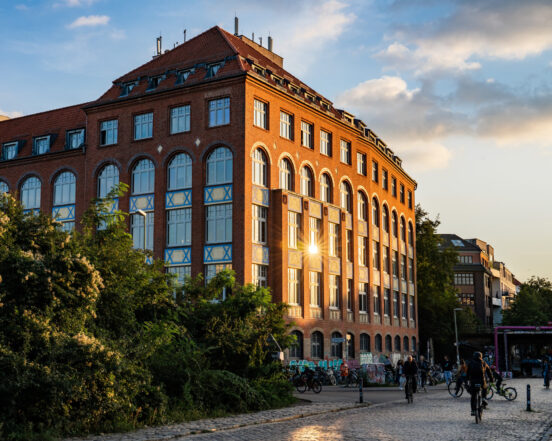
At 10:39 pm last night (Monday, April 8), the Cambridge City Council voted to pass a landmark new zoning law for the center of Kendall Square, including the area around the Kendall Square T stop and One Broadway, where CIC is located.
This zoning sets in motion some big, big things that you may be interested in knowing about, including a new gateway to MIT facing the T, many more buildings to accommodate Kendall’s growth, and in a first at this scale: a substantial requirement to set aside space for startups. This new zoning will transform our experience of Kendall Square. Read on for more detail.
- It enables the construction of about 1.1 million square feet of new commercial space around the T stop (that’s the equivalent of about 3 more One Broadways), plus a residential tower on top of the parking lot next to One Broadway. The residential tower will include some “micro-housing” on top oriented toward entrepreneurs. Several floors of office space at the bottom of that tower could potentially be another expansion of CIC.
- It requires the creation of hundreds of new housing units around Kendall, bringing more activity and life to our streets, particularly on weekends and into the evening. We have already seen the benefits of other nearby housing in terms of nearly two dozen new restaurant openings in the last few years. This will continue the trend toward a more lively Kendall.
- Further to the above, it requires substantial additional restaurant and retail space on the ground floor of all the new buildings, and it requires that at least half of that space be operated by non-chain retailers (defining a chain as having more than 5 locations in MA). This should help continue to cool-ify Kendall.
- The agreement requires MIT to work to create a new bike path (subject to a feasibility study) crossing Kendall Square along the Grand Junction Railroad right of way over near Catalyst. This could eventually provide connections all the way to the Minuteman bike path.
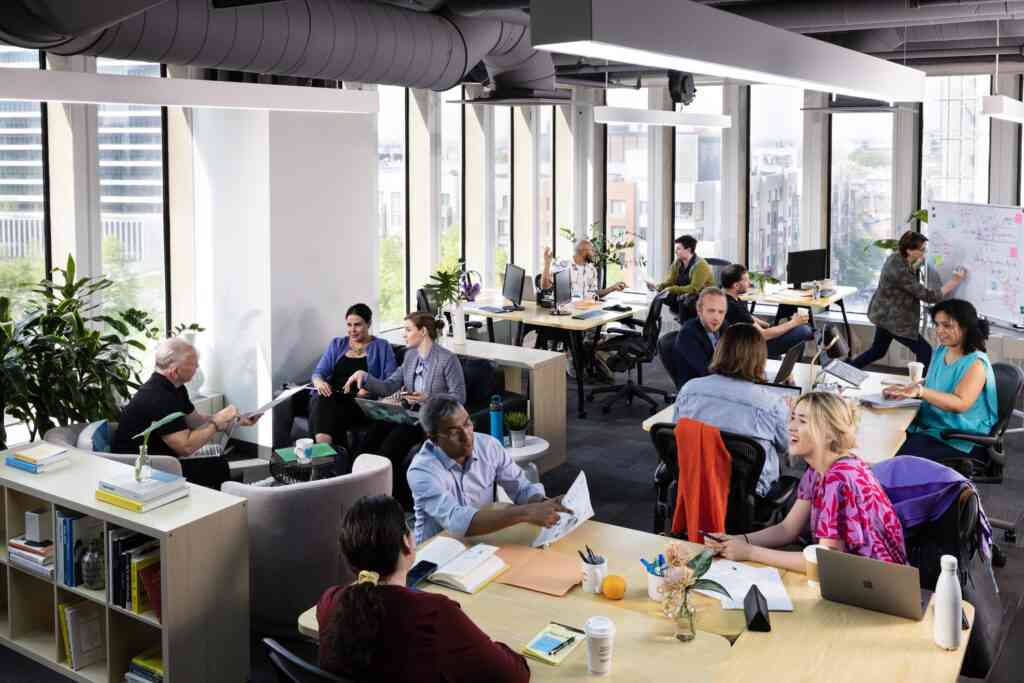
- Very near and dear to my heart, this proposal requires that 5% of all new office space be set aside as “innovation space”, defined as small (avg. 200 sq. ft.) spaces that are rented on a month-to-month basis, with substantial shared-space components (kitchens, coworking areas). In short, it defines what CIC, DogPatch, TechStars, Intrepid Labs, and Lab Central are doing, and says “you have got to have a fair amount of this kind of use”. This is great news for startups. It goes further to give extra incentives to the building owners if they increase the startup space to 20% of the total. This is important, because it addresses the concern that with the success of Kendall Square, global corporations might otherwise squeeze the startups out, given their ability both to pay more, and landlords’ understandable preference for deep-credit tenants over non-credit tenants.
- As part of this proposal, MIT plans to build a new “gateway to MIT” around the Kendall T stop area, for the first time properly turning its face toward Kendall, which has become the de-facto center of this area. Many design ideas have been floated, and the next step is for those to be refined.
It is hard to overstate the importance of this change to the future of Kendall. One of the most interesting aspects of this is what made it possible. Cities like Cambridge have historically had a strong anti-development bias. Why should townfolk want big, new buildings creating traffic, noise, construction hassles, and the like? Most don’t. And many Cantabrigians did turn out to say those things. Yet many other speakers at the City Council last night, and at previous public meetings on this topic, turned out to talk about the importance of innovation and entrepreneurship. They spoke about how these endeavors are critical to our prosperity in these days of intense competition with other regions, how they bring jobs to residents all across the state, and how the fruits of the labors of our innovators and entrepreneurs are solutions to important problems facing the planet. What is super-exciting to me is that our political leaders, by their vote, accepted these arguments. This is a major win for innovation.
A second and important insight here is that one reason that they were able to draw this conclusion is that our Kendall Square community has in the past decade worked very hard to become a more desirable neighbor to the rest of Cambridge. We are as a community committed to sustainable principles, and nothing is more telling than the fact that, over the past decade, despite millions of square feet of new buildings being built here during that period, traffic in Kendall Square has actually dropped. As a Globe article reporting on this said, that statistic is so startling that you’d think it was a mistake. We are walking more, biking more, and taking the T more. Over half of CICers take the T to get to work, and only about a quarter drive. Meanwhile, we are rebuilding the street-scape. Something that has been on everyone’s lips is how Kendall Square has dramatically transformed in past years from a drab, dusty, empty, corporate wasteland to a place you go out at night. We should not underestimate the degree to which our becoming a good neighbor (eliminating traffic, making Kendall a place you would actually want to be) influenced the greater Cambridge community’s willingness to step up for more of what we do here. This was a pat on the back for us doing the right things. Lets keep at it.
(As an aside, now we just need the state legislature to authorize the spending necessary to make sure that the Red Line can keep up with the demand here. It is already essentially at capacity at peak times, and forecasts suggest demand will double over the next decade an a half. The fix is investments in the Red Line that would allow trains to run more frequently. If you know a state senator or state representative, please tell them that if they want more jobs in Massachusetts without adding more cars to the road, they should support Governor Patrick’s proposal to invest heavily in updating our transportation infrastructure.)
I want to recognize here some of the community leaders who helped make all of this Kendall Square zoning possible. When I started to write this out, I realized just how many people there were. And I’m certain I’m missing some key players — many apologies. From the innovation/tech community that helped out with their time and their voices at public meetings to help get this done: Steve O’Leary, Katie Rae, Reed Sturtevant, Shaun Johnson, Brian Gilman, Mark Kasdorf, Chris Kasdorf, Pearl Freier, Johannes Fruehauf, Brian Dacey, Geoff Mamlet, Carlos Martinez-Vela, Kevin Wiant, David Barrett, Eileen Rudden, and Bettina Hein. I also want to thank many of the members of our local neighborhood organization, the East Cambridge Planning Team, and its President Barbara Broussard, as well as the other adjacent neighborhood leaders in Area IV and Wellington Harrington who took part in this process. I want to thank the City Council members who voted for this measure: Leland Cheung, Craig Kelley, Ken Reeves, Marjorie Decker, David Maher, Tim Toomey, and Mayor Henrietta Davis. It took courage to cast your votes in favor of this vision for the future, knowing that many reasonable people are concerned about more development. Thank you, Councillors Simmons and vanBeuzekom: while you had some concerns, you also told me that you saw much value in the proposal, and you invested significant time in making it what it is. I want to recognize the tireless effort of the all volunteer Cambridge Planning Board, and Community Development staff, notably Iram Farooq, Stuart Dash, Jeff Roberts, Roger Boothe, Brian Murphy, Rich Rossi and Bob Healy, amongst many others. Kudos to Greg Bialecki, Secretary of Housing and Urban Development for the Commonwealth, for lending his far-seeing perspective to this dialogue. I want to thank David Dixon and his team at Goody Clancy for providing intellectual leadership as Cambridge’s urban planning advisory firm, and all of the members of the Kendall Square Advisory Committee who worked for two years to shape many of the bones of what became the MIT petition. I want to thank Terry Smith from the Cambridge Chamber, and Travis McCready, Alexandra Lee and Janneke House from the Kendall Square Association staff: community doesn’t happen magically, it is your work that pulls it together. Lastly, I want to thank the MIT folks that made this happen, notably Steve Marsh, Michael Owu, John McQuaid, Meredith Christensen, Patrick Rowe, Maureen McCaffrey, Sarah Gallop, Kelley Brown, Marty Schmidt, Israel Ruiz, Rafael Reif, and Tom Kochan, amongst many others. While this petition had your name on it, it incorporated the ideas of everyone I’ve listed here and more, and you did a masterful job pulling together everyone and responding to everyone’s interests. Bravo.
Without all of our efforts working at this together, this would not have happened. Thanks all.